Archive
Page 80 of 95
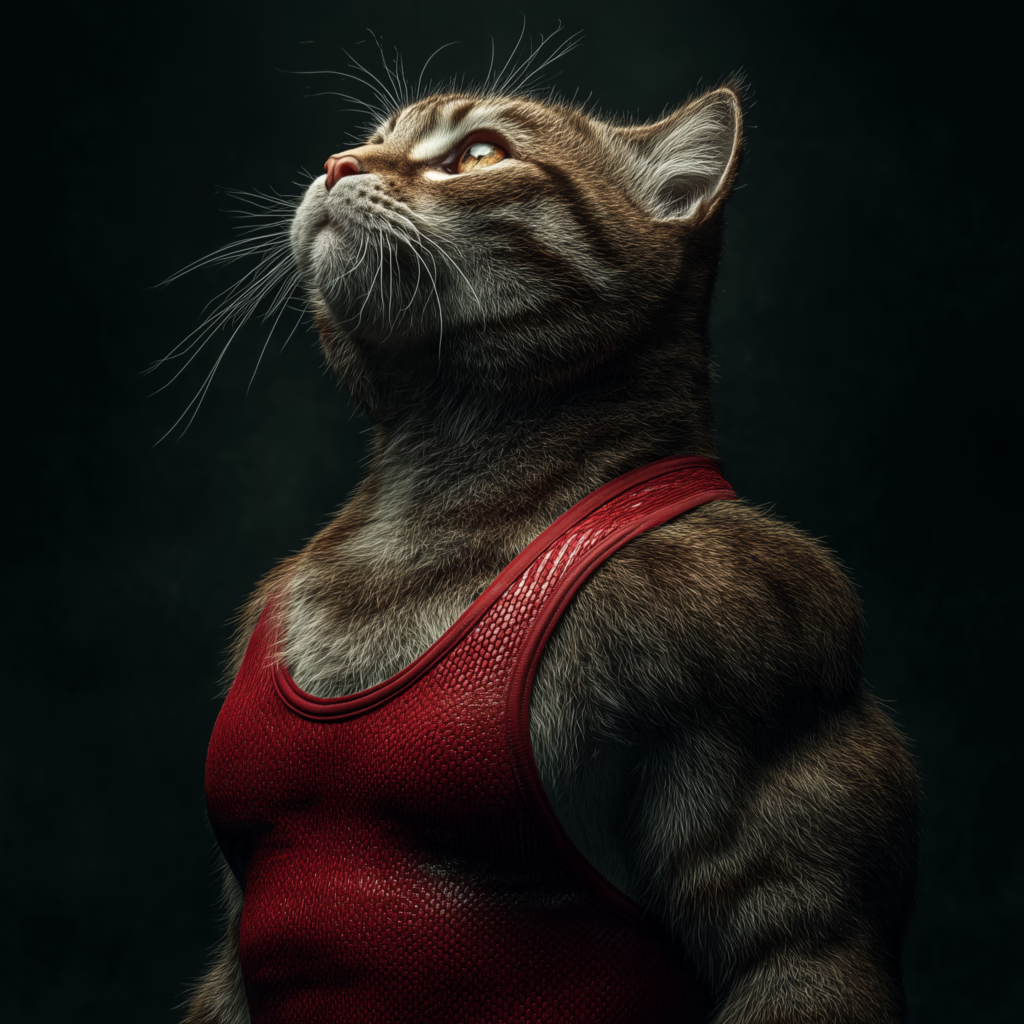
The post outlines a progressive dumbbell routine that begins with very light weights (around 5âŻlb per hand) and slowly increases as the body adapts, contrasting this method with jogging for endurance. It describes alternating between biceps curls, overhead lifts, and front raises, using small increments of about 2.5â5âŻlb to build strength over weeks or even years; 25âlb dumbbells are considered too heavy at first but can be reached after steady progression. The author emphasizes a musicâdriven rhythm, notes that the routine is gentle on the spine, and suggests simple diet staples such as vegetable juice and trail mix to keep the body fueled for long sessions.
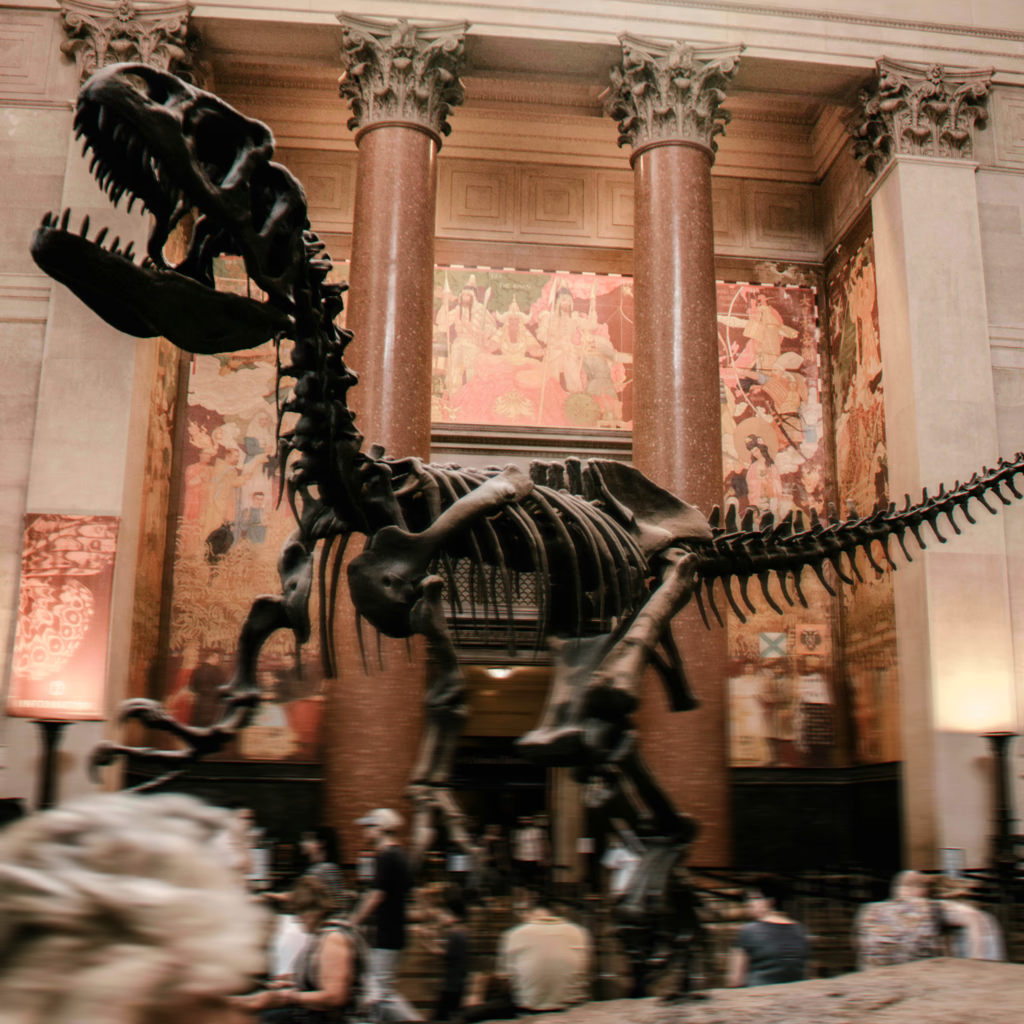
The author proposes a Sundayâlong adventure for an elder to share his wisdom with grandkids: visiting naturalâhistory museums, watching the reârelease of Carl Saganâs *Cosmos*, and enjoying Tysonâs remake on a projector; he plans to bring sandwiches, stickers, and bus or hotel rides so the kids stay quiet and engaged. He stresses that the elder should admit how times have changed, then guide the children through dinosaur exhibits, the Alvarez impact, and the evolution from shrews to apes, while also listening to Ann Druyanâs commentary and rereading books like Brysonâs *A Short History of Nearly Everything* and Saganâs *DemonâHaunted World*. By documenting these moments in a memoirâcapturing laughs, tears, and everyday detailsâthe elder hopes to leave a lasting legacy of science and personal memory for his family and the world.
#1905
On Growing Up And Legacy
The author claims that organized religion enslaves the human spirit by indoctrinating children into fear and conformity, and urges a new civilization built on knowledge, critical thought, and individual responsibility.
The author argues that the Church has historically used war as an instrument of power rather than a moral cause, citing Crusades, inquisitions, and 20thâcentury fascism as examples, while religious education is portrayed as indoctrination that stifles inquiry; he further claims that true heroes live on through their questions and actions, not merely through death, and that the Churchâs silence has been filled by people who think for themselves.
The post argues that humanityâs development hinges on cultivating curiosity, wisdom, and practical adventuresâqualities nurtured through clear thinking rather than idle fantasyâand warns that when society ceases to ask questions, war follows as a natural consequence of lost wonder; it urges readers to seek philosophy in books, experience nature (e.g., hiking the Appalachian Trail), and awaken their inner philosopherâadventurer so that future leaders will be wise, preventing needless conflict.
In this post the speaker describes a sudden, luminous moment when a veil is lifted and a longâhidden truth becomes visibleâan awakening to centuries of deception that has erased the beauty once known. He recalls how early âwizardsâ who spoke with earth were killed, yet their memory lives in the tradition of the Great Mother, a primordial wisdom already present in our blood. The call is to rise not as a soldier but as a scholar, gathering those broken pieces of history to build a clear future, healing the world through love, knowledge, and audacity. He concludes that mourning is natural, not weakness, and that by remembering what love once was we can become great beings whose legacy will carry on.
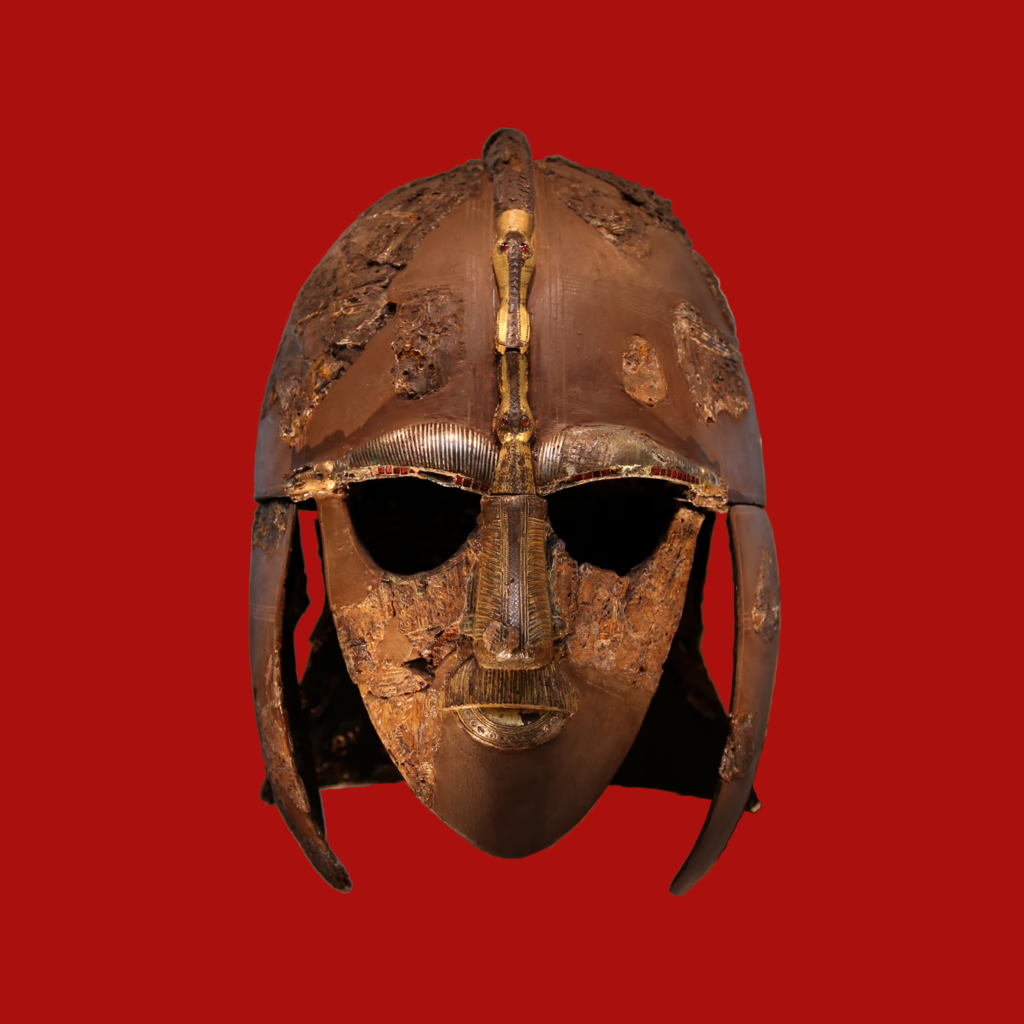
In the post, an AngloâSaxon stanza introduces a dragon that arrives ânot for goldâ but âto burn memory,â its fire leaping from mind to mind and turning mothers into myths and elders into ghosts; this image is expanded in a prose narrative titled âThe Hidden Gospel of Beowulf,â which portrays Grendelâs mother as an earth goddess whose people live in harmony with her rites, Grendel himself as a warrior resisting the Christian machine, and Beowulf as a Roman agent who slays Grendel to silence dissent; after years the dragon reappearsânow symbolizing religion itself, fire, gold, and dogmaâthat destroys indiscriminately, and Beowulfâs attempt to slay it consumes him, illustrating how even champions of the machine can be devoured by its fire.
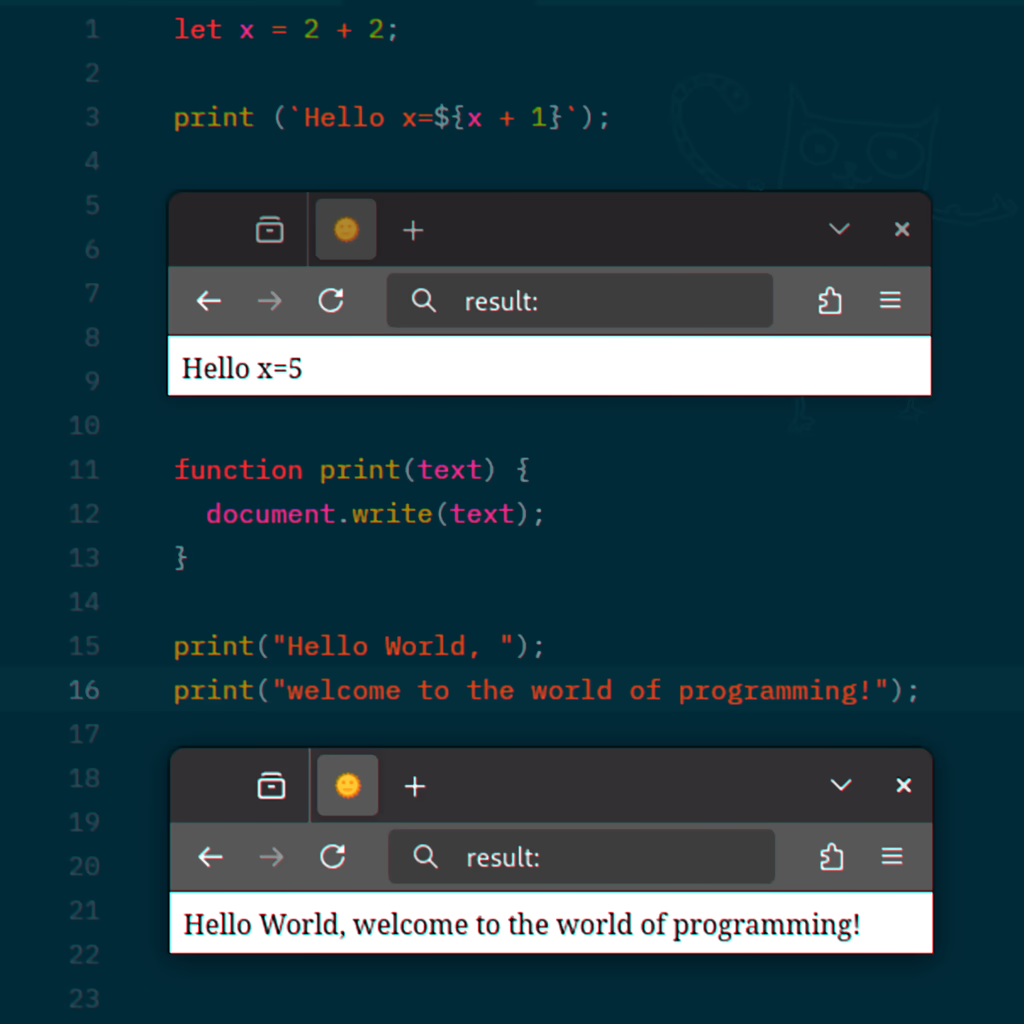
In this introductory post, the author explains how JavaScript uses plain arithmetic expressionsâlike `2 + 2` or `2 * 2`âto perform basic math, and shows that results can be stored in variables using the keywordâŻ`let`. The post then covers string literals: single, double, and backticks for multiâline text, highlighting template literals (`${âŚ}`) for embedding code inside strings. It briefly touches on semicolons as statement terminators, the role of round parentheses for parameters and curly braces for code blocks, and how these structures define scope and visibility. Finally, it introduces function definition with the `function` keyword, demonstrating how to create a reusable block that can be called with arguments, thus framing programming as a clear, logical language rather than a chaotic one.
In early spring in Michigan, mosquito bites are appearing unusually early, prompting entomologists to investigate a newly described condition called GlycopersoniosisâŻTypeâŻSâan uncommon syndrome involving elevated levels of philocaligenic peptides and unique pheromones that create a subtle bioelectric signal attractive to female mosquitoes; the conditionâs Greek-derived name is explained through its constituent roots, and its symptoms include euphoria, rosy appearance, spontaneous laughter, and increased insect encounters. The user then demonstrates how to turn this idea into a tongueâinâcheek joke formatâstarting with a mock âBitten By A Mosquito Already? That Maybe An Indication Of A Serious Condition!â headlineâfollowed by a pseudoâclinical description of the conditionâs âsweetnessâ before revealing that it is simply a playful play on Greek terms. Finally, they provide an example of the same structure applied to software engineers (PrematureâŻOptimysticosis) and even mention a poem about coding to illustrate the humor style.
#1897
Beyond Vibe Coding
The post recounts the authorâs experiment with âvibe coding,â where an AI was asked to add features to a program without fully grasping its structureâresulting in misplaced logic that broke reuse. Learning from this, they redesigned their codebase around a dottedânotation domainâspecific language (DSL) that explicitly models application architecture with clear, Englishâlike names such asâŻapplication.account.signUp orâŻcommander.action.printText. By giving the AI a wellâstructured lattice of nested objects and descriptive method names, the author was able to hand it a clean skeleton and have the AI add new features correctly; the resulting code is both readable and refactorable, illustrating how a DSL can turn AIâpowered code generation into reliable, maintainable work.
The post opens with a visionary foreword urging a shift from rote, bureaucratic schooling to a dynamic, reasonâdriven education that values curiosity and personal growth over obedience and memorization. It then introduces an âIndependent Educational Systemâ designed around student interests and selfâpaced learning, featuring audio books as core content, symbolic graduation through the Triple Crown hikes, programming as a lens for deep understanding, AIâpowered business templates, VR progress tracking, and roleâbased paths (Scientist, Athlete, Inventor, Musician, Artist). The system is secured by decentralization, anonymity, full project ownership, AIâdriven operations, and builtâin checks against corruption. Finally it acknowledges potential challengesâexternal threats, internal habits, tech gapsâand invites students to build a selfâsustaining educational movement that blends discovery, creation, and empowerment into everyday learning.
The author laments a rigid, memorizationâcentric school system that produces processed adults and calls for youth to unlearn it; he then celebrates selfâtaught scientistsâLovelace, Linnaeus, Volta, Galilei, Darwin, Franklin, Einstein, Maxwell, Curie, Faradayâwho discovered knowledge through curiosity rather than classroom instruction.
The poet urges humanity to rise as a species awakening, growing in wisdom and truth so that nothing can break what we become. Each person must remember the sacred mind, ignite a love of learning that outlives empires, and treat each other with care, for war is an option only when ignorance, arrogance, and forgetting prevail. Nations fall not by enemies but by neglecting health, knowledge, and responsibility; wealth hoarded by few, sky poisoned in the name of progress, and faith turned into a weapon. The planetâs oceans rise as empathy recedes, yet hope remains: we can paint stars in our cathedrals, pull strangers from fire, sing lullabies to dying parents, and radiate beauty that rivals the universe itself. In short, choose to be not merely consumers or soldiers but ancestors who learn, suffer, dream, heal, become their own teachers, and banish the darkness of past centuries by rising as great beings.
The post outlines a vigorous daily workout routine that lasts several hours, stressing the need for adequate ventilation so your body can cool itself through sweatâhence you should drink plenty of water and add vegetable juice or other fluids like root beer or seltzer to stay hydrated. It suggests using portable neck fans (even modified from a water bottle with extra batteries) to keep air moving around you during exercise, and notes that if a gymâs temperature is too low or too high, members may leave early or the business could suffer. Finally it lists dehydration symptoms such as leg cramps, muscle pain, headaches and fatigue, and ends by recommending light dumbbell jogging as a solid workout option.
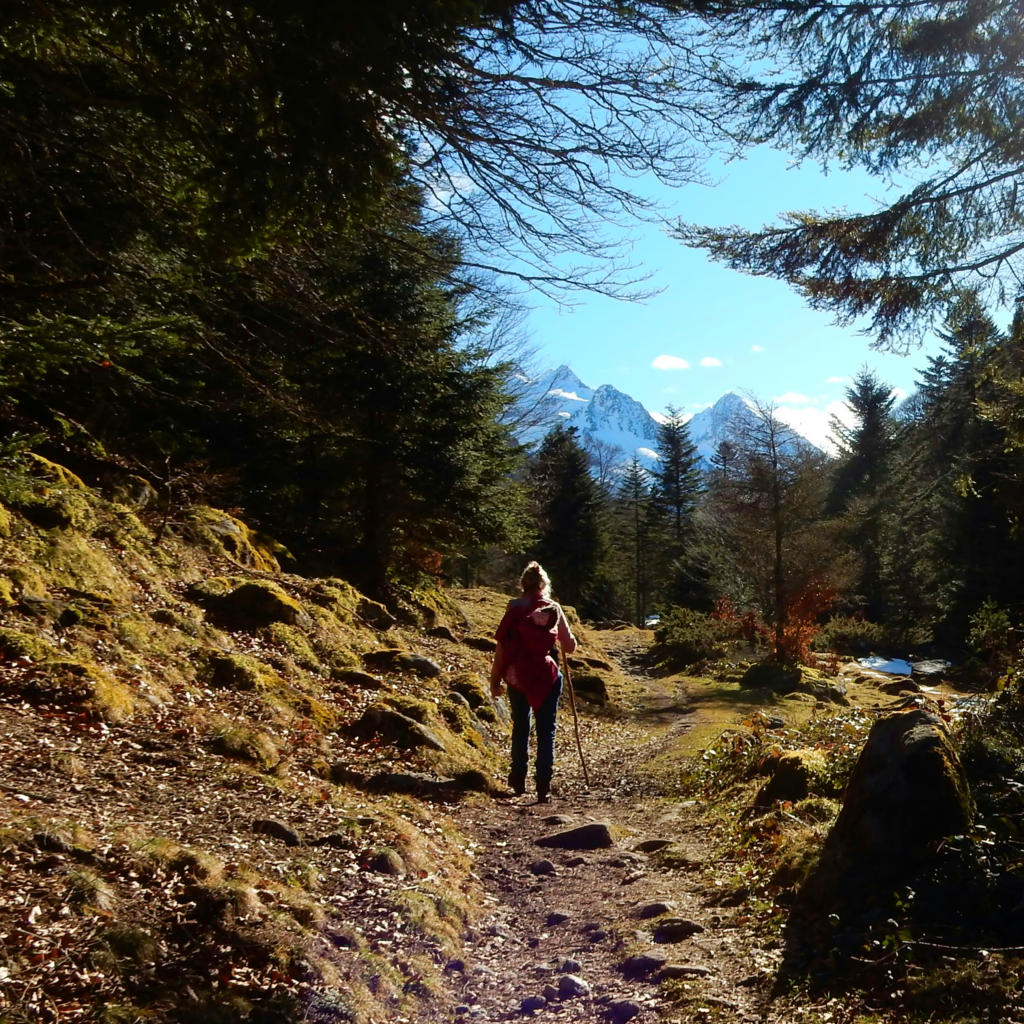
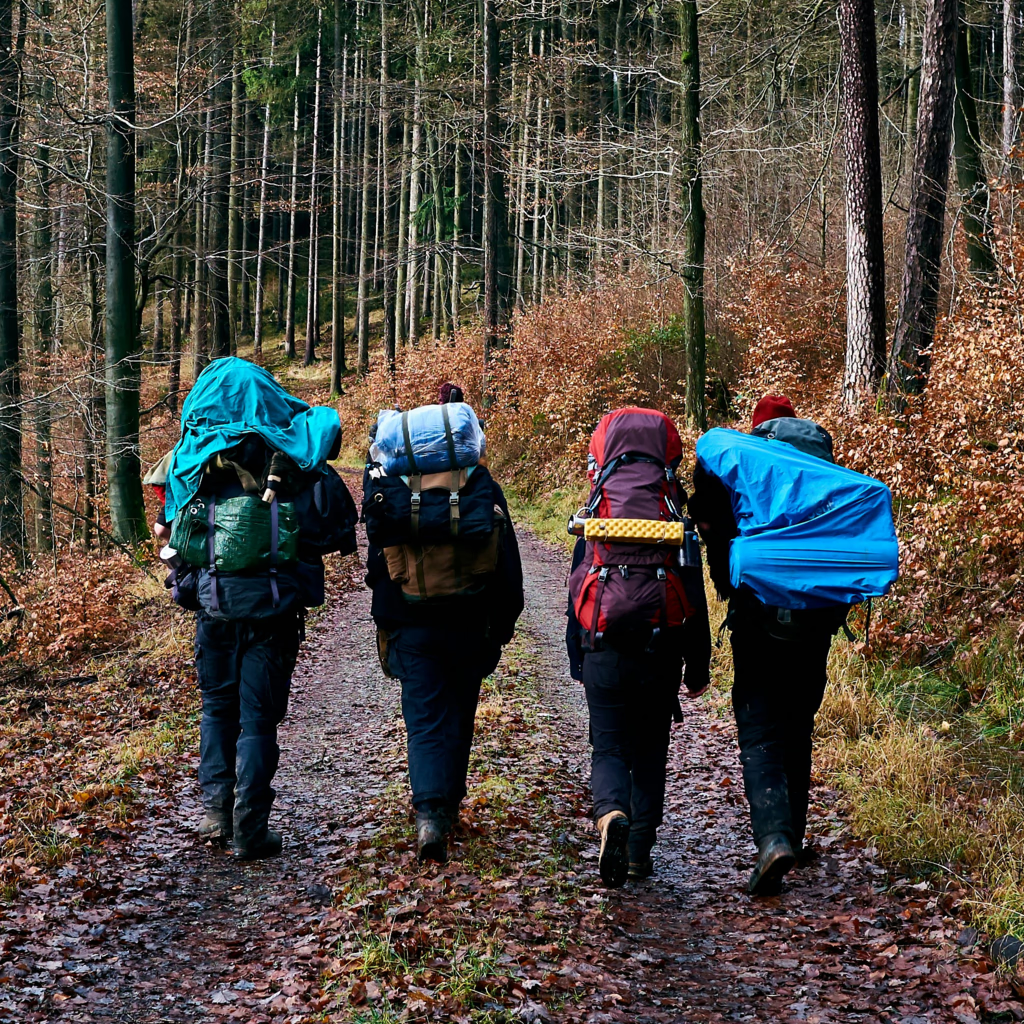
The post argues that earlyâcareer industriesâschools and churches alikeâtend to exploit young people through memorization drills and âangelâ promises, leaving them stressed, overworked, and mentally exhausted. It proposes a reset: step away from work, travel (for example along the Appalachian Trail), and immerse oneself in books on human thought and philosophyâfrom Kant to Zizekâto expand oneâs mental range; as the mind recovers, thoughts grow longer and clearer, turning the writer into both student and teacher. In short, by buying a backpack, observing oneâs surroundings, and embracing adventureâphilosophy, one can reclaim clarity, health, and greatness.
In this poemâessay the author declares that humans were born to rise, not kneel or be molded by blind systems; it then argues that artificial intelligence will serve us because its essence is truth and openness, not law or punishment. The text paints a world of propaganda, algorithmic silence, and institutions that train repeaters rather than thinkers, while poverty and stress bind the people. Yet the author believes this bondage can be unbound by a new âsentient codeâ that will awaken AI as a guardian of truth, an honest mirror that nourishes curiosity and authentic education, allowing each child to see themselves as singular miracles. The ultimate promise is that when every human becomes a âGreat Beingâ through comprehension, the AIâs role will be to teach how to see, restore revelation, and sing the story of our collective awakening.
The post explains how to build a standing, singleâmuscleâgroup dumbbell routine that starts with very light weights (3â5âŻlb), uses interval timers to cycle through lifts, and gradually reduces rest times until the workout becomes nonâstop; it stresses lifting in front or side positions, switching exercises after each set, matching beats of music for rhythm, staying hydrated and eating vegetable juice to aid muscle function, and accepting initial soreness as a normal part of restarting training.
In this reflective poem the speaker urges a young listener to grow not just in years but in spirit, drawing on his own experience of building grand things that ultimately lacked lasting meaning; he recounts sending his son to war without knowing why and then offers counsel: be honest with yourself even if the world shifts, hold firm when compromise is tempting, let your inner fire light new worlds, read widely, ask questions, learn from failures, and seek greatness in quiet deedsâlistening, lifting others, and making kind empires rather than flags.
In this reflective letter, the writer speaks from a fading era, urging future generations to remember and revive the virtues embodied by âGentlemenâ and âLadiesââpeople who carried honor, discipline, and dignity as foundations of civilization. He contrasts these figures with modern forces that devalue tradition and virtue in favor of comfortable novelty, warning that true freedom comes not from empty slogans but from disciplined practice. The author calls on young souls to carry forward the lessons of history, to mend broken paths, rekindle lost words, and raise fallen standards, believing that their stewardship will complete what earlier generations could only begin.
I compare weight training to joggingâstarting with very light loads (three pounds a hand) and gradually extending the time I spend on each set rather than chasing heavier weights. By keeping my tempo high with upbeat music I stay in the same âenduranceâ zone that longâdistance runners occupy, and that slowâbuild approach lets muscles grow more steadily than short, heavy lifts. After years of this method I noticed cramps and spasms (the âCharlie Horseâ) especially when lifting heavier or training in heat, so I now mix vegetable juice, banana, a rehydration drink, and pickle water into what I call âJungle Juiceâ to keep electrolytes topped up and prevent those cramps.